



Synopsis
At eighteen, a young man with no remarkable football skills receives an opportunity that seems to make little sporting sense: he joins a team as its reserve goalkeeper, largely because of his extraordinary luck. When the team falls behind, he is sent onto the pitch. The expectations surrounding him are low, but the match soon takes a surprising turn. Awkward movements become unlikely saves, dangerous shots fail to find the net, and situations that should expose his inexperience somehow work in his favor. Even a penalty shootout becomes another stage for his astonishing good fortune. Success, however, does not earn him the uncomplicated acceptance of his teammates. His unusual rise provokes jealousy, and he is moved from goalkeeper to striker. A different position should demand a different set of abilities, yet the same strange pattern follows him: the ball keeps rolling toward him, creating opportunities no one could reasonably have planned. Moving between desperate defense and unexpected attacking chances, the story follows an inexperienced newcomer whose presence unsettles familiar ideas about skill, selection, and sporting achievement. The tension comes from both the matches and the reactions of the people around him. As pressure builds on the pitch, every unlikely bounce raises the same question: how far can this young player's luck carry him when an entire team is watching?
Episodes · 50
You Might Like


Superstrong Mopsy Takes on the Billionaires
Mopsy, only three years old, possesses incredible, superhuman strength. When her mother’s life is threatened by a severe heart condition, the seemingly tiny child boldly breaks into the mansion of the powerful Ashford family, desperate to find a way to save her mother.
 @Dika Bercerita

The Sixth Prince and His Fierce Retainers
A modern office worker finds himself inside the body of a weak sixth prince. Royal birth offers no easy security: the position he inherits is one of rejection and vulnerability, shaped by the low expectations of people around him. When enemies attack, however, he answers with extraordinary power, defeating masters who expected little resistance from the supposedly helpless prince. Their first mistake is believing the old reputation still describes him. The journey toward the capital becomes a succession of attacks and forceful responses. Rather than remain a target, he destroys the opposition sent against him and gradually takes control of his own movement. Every encounter changes the balance between the prince others have dismissed and the formidable figure now occupying that role. The road home is therefore also a passage out of the powerless identity imposed on him. Inside the palace, rivalry creates another arena for his rise. He removes competitors and advances from an abandoned royal child toward a position of real authority, supported by strength that reaches an exceptional level. The story combines a change of worlds with a struggle over status, following a protagonist who refuses to repeat the weakness associated with his new body. His return to court becomes an opportunity to decide what being the sixth prince will mean from this point onward.
 @Tiara Menulis
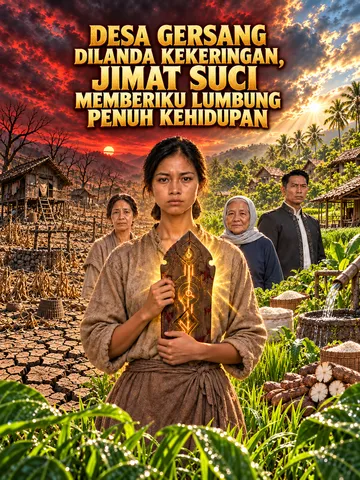
A Drought-Stricken, Desolate Village
As a severe El Niño drought ravages West Java, Siti—an orphaned young woman—and her gravely ill mother face starvation while being hounded for debt and threatened with the loss of their home by a corrupt village chief and predatory aunt and uncle. In her darkest hour, Siti uses her own blood to awaken an ancestral sacred Batik talisman; the artifact grants her the power to conjure clean water, food, and medicine, as well as to wield protective magic. She saves her mother, frees herself from her exploitative relatives, and exposes the village chief’s crimes—including the embezzlement of disaster relief supplies and the hiring of thugs for a kidnapping—rallying the villagers to file a collective complaint. She subsequently shatters the monopoly held by the grain and water merchant Hasan, protecting the village amidst gunfire and arson. The talisman is revealed to be a lost royal relic, sparking a fierce struggle for its possession among the wealthy merchant Arif, criminal syndicates, and powerful elites. Siti reveals the truth of her lineage, sways public opinion, and leaves her village to seek the remaining fragments of the artifact. Braving jungle ambushes and navigating a secret royal realm, she fuses the first fragment with the talisman and confronts the malevolent spirit of Dharma, a traitorous official from a millennium past. Bagus, an emissary revealing himself as a loyal descendant of the royal court, joins forces with her to break a forbidden blood-sacrifice ritual. Dharma flees, wounded, while Siti embarks on a new quest to gather the remaining fragments and safeguard the people of the archipelago.
 @alurku
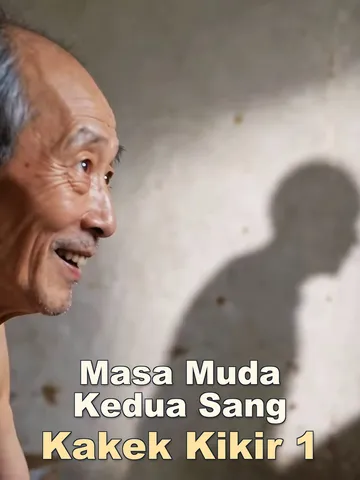
A Second Youth for the Stingy Old Man 1
An elderly landlord known for his miserliness is approaching the end of his life when he becomes bound to a system that can extend it. The chance to survive comes with a condition that directly challenges the habits for which he is notorious: he must make the tenants in his properties happy. Keeping his remaining years is no longer something he can pursue only by holding tightly to what belongs to him. His own future now depends on the well-being of people whose needs he has not been accustomed to putting first. Driven by the wish to stay alive, he begins to change his unpleasant behavior. The miser gradually becomes a generous protector, replacing an old pattern of dealing with tenants with actions that bring them care and support. That reversal produces laughter as well as warmth, giving his later years a quality that mere possession could not provide. The system's demand links a supernatural opportunity with a practical emotional challenge: he has to learn how other people experience the way he treats them. The story follows the transformation of an old man whose survival becomes tied to kindness. In seeking more time, he also discovers a different way of inhabiting the time he has, surrounded by relationships that can offer more than a calculation of loss and gain.
 @Lilis dan Buku

The Rise of the Girl They Scorned
Raina Narita is born into a noble family with an intellectual disability, yet she also possesses an extraordinary talent for the sword. The assumptions made about her leave little room for the ability she carries, setting the stage for a sharp contrast between how she is judged and what she can accomplish. After receiving instruction from the Sword God, she returns at a time when her family is being pressured and humiliated. The crisis gives her talent an urgent purpose. What is at stake is no longer only her own standing, but the fate of the people to whom she belongs. Raina rises to confront the enemies threatening them, wielding her sword as she moves from an underestimated young woman to the person capable of leading her family toward renewed glory. The story connects martial training with a struggle against contempt and the responsibility of protecting one's home. Her exceptional skill becomes visible through the choices she makes when the family is under attack. Rather than allowing others' judgments to determine her place, she steps into a role shaped by courage and action. Through a return marked by conflict, the drama follows a sword prodigy's emergence as a defender, showing how a person dismissed by those around her can become central to the future they are fighting to preserve.
 @Tari dan Cerita

The Shadow Ruler Rises 1
In a world where lightning and fire command admiration, a young man awakens the power of darkness and finds himself treated with contempt. Those around him assume that his element is inferior, dismissing its potential before they understand what it can become. Their judgment places him on the lowest rung of expectations, but it does not define the limits of his strength. As the power he carries reveals its true nature, the supposed weakness becomes the foundation of a very different future. His rise leads toward a throne of emptiness and command over hundreds of millions of immortal shadow soldiers. Anyone who challenges that throne must face a force capable of overwhelming its enemies. The story follows the distance between the powerless figure others believe they see and the ruler his dark abilities allow him to become. Recognition is no longer something granted by people who favor brighter, more familiar elements; it is something his own power can demand. At the center of this fantasy is a struggle against the assumptions attached to an awakening. The element that made him an object of ridicule becomes the source of his authority, while the army gathering beneath his command gives tangible form to his transformation. From public dismissal to extraordinary dominance, his ascent asks who truly understands the strength hidden inside the dark.
 @Salsa Bercerita

Shang Hai Dragon Hunting Boy
Fajar, an impoverished university student working as a food courier, is struck by a car driven by his former classmate Citra. When he awakens, he can see hidden fractures and layers of value inside physical objects. After discovering rare blue chalcedony inside a discarded stone, Fajar enters the worlds of gemstones, auctions, and investment alongside his friend Bima and gem appraiser Alya. Every trail of fraud, however, leads to Reza, head of the Dragon Crest Group, and reopens the case of Fajar’s father, who was driven into bankruptcy by a forged shipping claim before disappearing. Reza controls merchants, farmers, and Citra’s family through fake certificates, switched auction pieces, stock manipulation, fraudulent debt, and duplicate warehouse receipts. Fajar loses Alya’s trust by concealing dangerous information and eventually loses his supernatural sight through overuse. Forced to continue without it, he relies on mathematics, audit records, and independent testimony to clear himself of insider-trading charges, rescue his father, and expose Dragon Crest’s financial black hole. Rejecting Reza’s offer to inherit the corrupt empire, Fajar builds a transparent commercial alliance jointly supervised by employees, merchants, and independent directors, while earning back Alya’s trust.
@alurku