


She never imagined that her own son would be the one to shut her out. But when a mother's love is taken for granted and family becomes a source of humiliation, she decides she will no longer keep the peace at the cost of her dignity. Cast out of her home, she makes a decision her son never sees coming: she sells the house. For her, the sale means more than letting go of a property. It is the first step toward taking back control of her life. Her unexpected response brings their conflict into the open, forcing mother and son to confront what remains of their relationship. How will he react when the mother he dismissed refuses to back down? And can she move beyond the pain of betrayal to build a new beginning? A powerful family drama about broken trust, unexpected revenge, and a mother's determination to reclaim her dignity.

Betrayed by her fiancé and her stepsister, a woman must rebuild her life while facing an immediate responsibility: paying for her mother's medical care. Heartbreak cannot put those expenses on hold. A highly paid position as a nanny offers a way forward, taking her into a household where the work will become far more personal than she initially expects. As she cares for an autistic child, she gradually develops a meaningful connection with him. Her presence and dedication help change the relationships within the home, and her employer begins to respond to the woman behind the job. A practical arrangement made under financial pressure becomes the setting in which trust and affection can grow. At the same time, caring for others gives her a new foundation after the collapse of her own engagement. Her past does not disappear simply because she has found a different place to stand. Wrongdoing must still be exposed, and the harm caused by betrayal remains part of the journey she has to overcome. Following her movement from personal upheaval toward professional success and a happy family, the story places care at the center of a second chance. She begins by seeking the money to support her mother and gradually finds the possibility of a life she can claim for herself.

Ten years ago, the wealthy father of the woman he loved forced a young man to end their relationship. His life was then torn away from the world he knew when he was cast into another realm. Only now has he returned. The years missing from his own familiar surroundings have continued to unfold for the people he left behind, creating a distance he cannot understand merely by coming home. He discovers that his former lover has been living in hardship with their daughter. The child is seriously ill, making the reunion an urgent encounter with responsibilities as well as old feelings. What happened during his absence can no longer remain an abstract loss of time. It is present in the difficult life of the woman and the vulnerability of a daughter whose existence changes what returning must mean. He vows to bring them both toward happiness. The strength associated with his extraordinary return now has a purpose rooted in the family before him. The story connects a journey through another world with the emotional consequences of a decade apart. Rather than treating power alone as the answer to everything he has lost, it places a returning man before the people who need him now. His second chance begins with the determination to protect the mother and child whose future he wants to share.


Dismissed as a foolish son-in-law and treated with contempt, a man is thrown into a river as though his life has no value. His unexpected awakening changes everything. He emerges with extraordinary martial arts and medical abilities, gaining the power to challenge people who once assumed he could only endure their abuse. The helpless figure they remember no longer matches the man standing before them. Rather than immediately reveal the full extent of his strength, he conceals his abilities and prepares his revenge. This disguise gives his return an element of uncertainty: those who look down on him continue to judge an appearance that no longer tells the truth. As he acts against his enemies, his struggle expands into a confrontation with the criminal forces operating throughout the city. Protecting his family becomes inseparable from answering the harm done to him. His transformation is measured both by what he can do and by what he chooses to defend. Martial skill allows him to face violent opposition, while exceptional medical knowledge adds another dimension to his new capabilities. Moving from humiliation toward a position that shakes the entire city, he must turn sudden power into decisive action. This is a revenge story centered on a rejected family member who returns strong enough to resist intimidation and protect those closest to him.
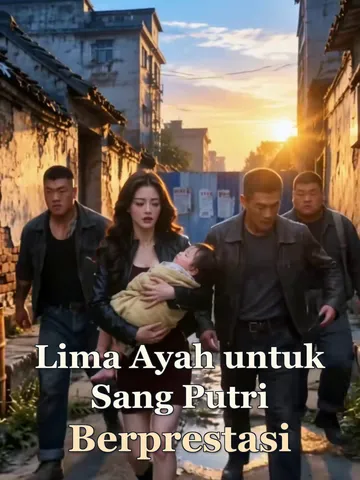
Five young men take on the task of raising a baby girl, creating a family through care rather than a shared bloodline. The child grows up with their support and becomes an outstanding student at a prestigious university. Her achievement marks an important stage in her own life, but it also reflects a relationship built across the years in which the five friends brought her up. Their place in her world cannot be reduced to a distant favor or an unusual beginning. They are the fathers whose care made her childhood possible. As time passes, however, the people who once looked after the child begin to need care themselves. Their health declines, changing the practical demands within the family. The daughter and her husband respond with sincere attention, taking responsibility for the men who raised her. What was once the work of protecting a young life becomes a commitment to supporting older ones. The story follows that passage between generations without making biology the measure of belonging. Success at university is part of the daughter's growth, while the decision to care for her adoptive fathers expresses what she carries forward from home. Through upbringing, achievement, marriage, and the vulnerability of aging, the family demonstrates a bond sustained by actions. Their shared history turns gratitude into a continuing relationship of mutual care.

A gravekeeper frees a sacred creature that has endured centuries of imprisonment. The rescue offers the possibility of a remarkable reward, but wealth is not what he asks for. His one wish is that his daughter remain safe. That modest request gives a private act of kindness consequences far beyond anything he expected. The creature's long confinement is connected to a larger conspiracy, and the gravekeeper gradually finds himself drawn into dangers hidden behind the seal. For a man concerned above all with his family, the unfolding mystery cannot remain an abstract struggle among supernatural powers. His daughter's safety gives every threat an immediate and personal meaning. Yet the kindness that brought him into this situation has also created bonds he cannot fully see. When danger arrives, thousands of spirits return to repay the debt of gratitude. The man who seemed to stand alone discovers that his actions have been remembered beyond the boundaries of the living world. A mysterious black coffin, an ancient seal, and the presence of the dead frame a story driven by a father's simplest hope. Its supernatural power grows from compassion rather than the pursuit of riches, linking the liberation of a sacred being with the protection of a loved one. What was done without an audience ultimately becomes a source of extraordinary support when that support is needed most.

The demon king expects the phoenix egg he has been incubating to reveal a magnificent sacred bird. Instead, it hatches into a human baby girl. Her unexpected arrival gives the demon realm a princess unlike any it could have anticipated, and the difference between her origins and her surroundings becomes part of everyday life. Growing up among supernatural beings, the little girl does not regard her human appearance as a mystery. She simply believes that she is a phoenix taking an unusually long time to develop. That innocent explanation shapes the way she approaches a world governed by very different expectations. Her presence repeatedly throws the demon realm into confusion, bringing a child's perspective into places accustomed to authority and power. When ancient creatures begin to awaken, the truth about her identity also comes into view. What seemed to be an astonishing mistake in an egg's hatching becomes connected to a much larger secret. Yet the importance others attach to her background does not determine her own priorities. Even as questions of identity and power surround her, sweets remain more interesting to the young princess than dominion. The contrast gives the story its warmth: a formidable supernatural world must make room for a child whose wishes remain wonderfully small. Around that unlikely beginning grows a fantasy of belonging, hidden origins, and the bonds created by raising someone who does not fit an expected bloodline.

Rizky, Andi, and Fajar have been friends since childhood, but adulthood has taken them in different directions. Andi and Fajar have found success in the city, while Rizky has remained in the village. The distance between their lives leads Rizky's wife, Siti Rahma, to question how much their old friendship still means. Shared memories may be easy to speak about, but changing circumstances raise a harder question about whether the bond can survive beyond them. That question becomes urgent when Siti suddenly falls seriously ill and requires an expensive course of treatment. Faced with costs he must somehow meet, Rizky turns to his two old friends for help. Their response arrives in a form he did not expect: both men immediately return home. The story follows a friendship brought out of memory and into the pressure of a family emergency. The friends' different levels of success create uncertainty, while the illness makes the value of support impossible to treat as an abstract matter. For Rizky, asking for help means relying on a bond his wife has begun to doubt. For Andi and Fajar, returning gives that bond a visible response. Without assuming that distance has erased affection, the drama explores what lifelong friendship means when someone finally needs it to become an action rather than a promise.

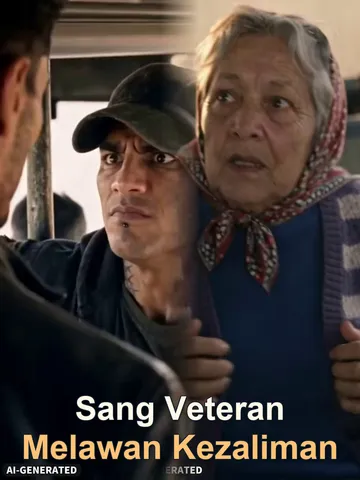
An elite former soldier returns to his hometown after retirement and finds that the people closest to him are being oppressed. His mother and younger sibling have fallen under the pressure of a ruthless business magnate, turning what should be a homecoming into a confrontation with injustice. He refuses to accept the treatment of his family and brings the combat skills of his former life into a struggle on their behalf. Facing corrupt forces, he sets out to remove the threats around them and defend their honor. The story follows a capable fighter whose purpose is rooted in a deeply personal discovery: the place he has come back to is not safe for those he loves. His opponent's wealth and influence create the conditions for intimidation, while his own strength gives him a way to resist it. Rather than surrendering to the power already established in the town, he acts on the belief that his family should not have to endure abuse. The action grows from that refusal, connecting physical confrontation with the wish to restore dignity and protection at home. Through the former soldier's return, the drama places family loyalty at the center of a fight against corruption, asking what happens when someone trained to confront danger finds it waiting not on a distant mission, but beside his own family.


A human baby is abandoned in a swamp and nearly becomes prey for the wild creatures living there. The ruler of the swamp first takes an interest in the infant for a practical reason: the child's power can ease the poison affecting its own body. Their connection begins with need rather than affection, bringing together a vulnerable human life and a creature concerned with its own survival. As they travel in search of a cure, however, that arrangement slowly changes. Facing danger together creates a closeness that neither their differences nor the original motive can fully explain away. The swamp's ruler begins to care for the child as more than a source of relief. What once seemed useful becomes precious, and the journey toward an antidote becomes a journey toward parenthood. The story follows the growth of a family across the boundary between human and animal. Its central transformation is emotional: a powerful creature learns to recognize a responsibility that extends beyond its own suffering. The abandoned infant, meanwhile, finds protection in the most unexpected guardian. Through the perils they share, the ruler becomes a loving father and discovers a new family. Blending the search for healing with an unlikely bond, the drama explores how companionship can turn dependence into care and make belonging possible where neither character originally expected to find it.

A billionaire returns home pretending to be poor in order to test how his family will treat him. By concealing his wealth, he places himself in a position where people's responses cannot be explained by the advantages they expect from his fortune. The disguise brings humiliation from an in-law, but it also reveals a very different kind of loyalty. His younger sibling is willing to make sacrifices to protect him, even while he appears to have little to offer in return. Moved by that sincerity, the billionaire acts against the people responsible for the mistreatment and helps the sibling build a better life. Success as a manager and ownership of a luxurious villa become part of that change. When his real identity is finally revealed, the choices made during his supposed poverty acquire a new significance. The story follows a family test whose most important result is the discovery of affection that did not depend on status. Money allows the returning man to alter circumstances, but it cannot create the sincerity he has witnessed. The contrast between contempt and protection gives the drama its emotional center. Through a homecoming built around a hidden identity, the narrative explores the value of remembering who stood beside someone before they knew what that person possessed, and why such loyalty deserves a meaningful response.

A father takes his child with him as he looks for a partner, only to discover how quickly potential relationships can end. Dozens of women walk away after learning that he has a child. Their reactions make genuine acceptance of the child central to what he wants from a future companion. Then father and son meet a modest truck driver whose sincere attention to the child sets her apart. Her kindness offers the father a reason to hope, but it also awakens a concern about what might happen if she knows the full truth about him. He is wealthy, and he chooses to conceal that identity by pretending to be an ordinary laborer. Afraid that money could change the sincerity he values, he allows their connection to begin around a version of his life that is incomplete. The story follows the tension between his wish to find an honest relationship and the disguise he uses to protect that wish. His child's place in the relationship matters as much as romance itself, because a partner must be willing to accept the family already beside him. Against that need, the truck driver's uncomplicated care becomes especially meaningful. What begins as a search for love develops into a question about trust, wealth, and whether a bond built around kindness can bear the weight of a concealed identity.

Rizky Saputra is working desperately to save his seriously ill mother. His efforts are driven by an urgent family need, but hardship is followed by personal betrayal: his girlfriend turns against him, and he loses all his money at a casino. With the resources he hoped to rely on gone, the possibility of helping his mother seems more fragile than ever. At this lowest point, an unexpected change gives him a new way forward. Rizky accidentally awakens a supernatural power of sight. The gambling table, previously the scene of his complete financial defeat, becomes the setting in which his fortunes begin to change. An ability he never expected now challenges the circumstances that had left him powerless. His journey is not limited to what happens at the casino. Alongside Putri Candra, he faces a succession of difficulties, and the two help each other through them. Their mutual support connects the promise of his new power with the wider task of rebuilding a life shaken by illness, loss, and betrayal. Combining a desperate wish to save a parent with an extraordinary opportunity for a turnaround, the story follows Rizky as he moves beyond the moment when everything appeared to be lost. His newly awakened sight opens a different path, while his alliance with Putri gives that change a human center. Together, they work through their problems and move toward a new life with renewed hope.

While Ryan is loading goods, his daughter Mia climbs into the refrigerated truck to help him. It is a small gesture of affection that he fails to notice. Distracted by a telephone conversation with his mistress, Ryan pays no attention to where his daughter has gone. He casually shuts the door and switches on the refrigeration system, turning an ordinary moment at work into a frightening situation for the child inside. Mia immediately knocks on the door, trying to make herself heard. Her father later remembers her, but instead of checking the truck or confirming her whereabouts, he assumes that Grandma Marge will come to collect her. He does not contact Marge himself and continues working. The distance between what he believes and what is actually happening to Mia becomes the center of the drama's tension. A child's need for help collides with an adult's distraction, followed by an assumption that someone else will take responsibility. Set around this devastating lapse in care, the story draws its suspense from a locked vehicle, a running refrigeration system, and the failure to verify a daughter's safety. Ryan's choices connect a private betrayal with an immediate failure of parental attention. As Mia remains trapped, the title's question points back to the actions and neglected responsibilities that placed her there. This family drama turns a routine delivery task into a disturbing examination of care, accountability, and the human cost of looking away.

The man who appears to be an ordinary janitor has a very different past. Vincenzo was a mafia don, and he has spent twenty years in seclusion. When he returns to that world, his purpose is both personal and bound to the power he once held: he must rescue his daughter, settle scores with his enemies, and reclaim his position as the don. The contrast between his everyday appearance and his former authority lies at the heart of his comeback. Saving his daughter gives the return its emotional center, while old enemies and the struggle for leadership bring the weight of his earlier life into the present. These goals cannot be separated easily. The father determined to protect his child is also the former boss stepping back into a contest over status and control. His hidden history gives the seemingly unremarkable janitor a significance that his outward role does not reveal. The story follows Vincenzo's reentry into the mafia world after two decades away, linking family loyalty with the settling of unfinished conflicts. His daughter is the person he seeks to save; his enemies and lost position define the wider struggle he must confront. Built around the return of a concealed godfather, this crime drama places a father's determination alongside a fight to recover authority. His comeback turns the title into a declaration of resolve: anyone who threatens his daughter brings her father, and the past he carries, back into the fight.

After waitress Riley Quinn stands up for a little girl being humiliated in a restaurant, refusing to apologize costs her job. The child's father, businessman Everett Mercer, notices something no amount of money has been able to buy: someone who puts his daughter first. Sophie has stopped speaking since her mother died, and Everett offers Riley one million dollars for a one-year marriage, along with a separate agreement to care for his daughter. In public, they will be a family; in private, the arrangement is supposed to remain strictly professional. Moving into the Mercer household, Riley brings patience, humor, and a determination to listen even when Sophie cannot find her voice. Everyday meals, shared activities, and small acts of protection begin to create a bond, while prejudice at school and pressure within the wealthy family give Riley plenty to confront. Yet helping Sophie does not mean erasing the mother she still misses, and a relationship defined by a contract can make genuine affection difficult to trust. As Riley and Everett grow closer, the boundaries they set become harder to maintain. What began as a paid arrangement now asks something far more personal of them both. With Sophie's sense of belonging at stake, can three people divided by grief, money, and social expectations choose one another and turn their temporary family into a real home?

In Jakarta, single mother and children’s space designer Alya reunites with Raka, her former lover and the head of the project company, after her six-year-old son Rafi injures his arm on a plaza ramp. They have been separated for six years. Raka gradually discovers that Rafi is his biological son, while the truth behind their separation emerges: Nadine intercepted Alya’s messages about her pregnancy and convinced him that she had taken money to leave. Determined to protect her son, Alya joins the plaza’s redesign project and investigates the accident. She uncovers evidence that Nadine’s family business replaced the specified ramp connectors with substandard components. Despite false accusations and family pressure, Alya continues pursuing the truth. Raka accepts responsibility for his company’s failures and learns to become a father through his consistent presence during Rafi’s recovery. Together, they respect Rafi’s wishes and agree on shared care, allowing their bond to grow through everyday companionship. Eventually, the deception and construction misconduct are exposed. Nadine and her father face investigation, and the plaza is repaired. Alya preserves her career and dignity as she and Raka slowly rebuild their trust. Walking up the safe, rebuilt ramp on his own, Rafi calls Raka “Dad,” and the three begin a new chapter together.

Arga, a tailor in Bandung, learns through a DNA test that he is the biological son of a wealthy Jakarta garment family, while Dimas was the baby mistakenly switched with him. Faced with a new surname, shares, and inheritance rights, Arga refuses to let his adoptive mother, Ratih, be treated as a suspect, or to let blood ties erase the care given by either family. A faded school uniform exposes another scandal: inferior fabric, unpaid rework, fraudulent procurement, and diverted insurance money. With Alya, Dimas, and the factory workers, Arga follows retained samples, attendance records, and company accounts. They discover that executive Rudi exploited the family’s divisions to conceal corporate crimes and deliberately hid evidence of the old baby switch. Dimas admits that he improperly lowered a bid and agrees to testify. Alya stops a tainted financing plan and places unpaid wages and compensation first, while Arga refuses to trade evidence for company shares and turns it over to the police. After Rudi is convicted, both sons keep the names they grew up with, and Alya remains in charge because of her ability. Six months later, the new rules are working. The family door no longer opens or closes according to surname, and Arga understands that belonging is not granted by wealth, but by the freedom to enter and leave under one’s own name.

A fire at a relocation apartment block in North Jakarta kills twelve people, and delivery rider Adi is quickly accused of arson. Naila, a legal aid lawyer assigned to defend him, discovers a draft judgment declaring him guilty before the first hearing has even begun. Following a nine-minute gap in the official timeline, missing CCTV footage, a lock fitted outside the door, and a relocated fire-safety archive box, Naila exposes how the Surya Group blocked escape routes, falsified inspection records, and manipulated evidence. Presiding judge Wirawan is also tied to private benefits. The investigation leads Naila to an even more painful truth: twelve years earlier, her father, retired judge Harun, concealed crucial testimony, while her own law-school tuition was paid through an affiliated foundation. Naila submits the evidence her father kept and refuses to let familial love become a shield from accountability. At a new trial, the arson charge against Adi is ruled unproven and he is released. Yet Adi admits his own wrongdoing: he accepted money to move an archive box and chose to remain silent. The fire, bribery, and old-case misconduct are tried separately, and those responsible receive sentences. The residents finally obtain safe new homes and their first compensation payments. Naila learns to separate love from complicity and continues defending people whose voices have not been heard.